Vietnamese Street Food, Pyrmont Updated August 2026

The History of Bánh Mì: A Vietnamese Staple

You have queued for one of these. Probably in the rain. In 2024 a global food site put that sandwich at number one on its list of the hundred best sandwiches in the world. Here is how a bread roll from a wartime flour shortage got there.

Start Here

What does banh mi actually mean?

Banh mi means bread. That is the whole translation.

It is the name of the roll, not the sandwich. Somewhere along the way English speakers started using it for the finished thing, filling and all, and that is now what everybody means by it.

Small warning if you ever order one in Vietnam without saying what you want inside it. You might just get bread. Technically correct, deeply disappointing.

The word made it into the Oxford English Dictionary on 24 March 2011. Not bad for something that started as a colonial leftover.

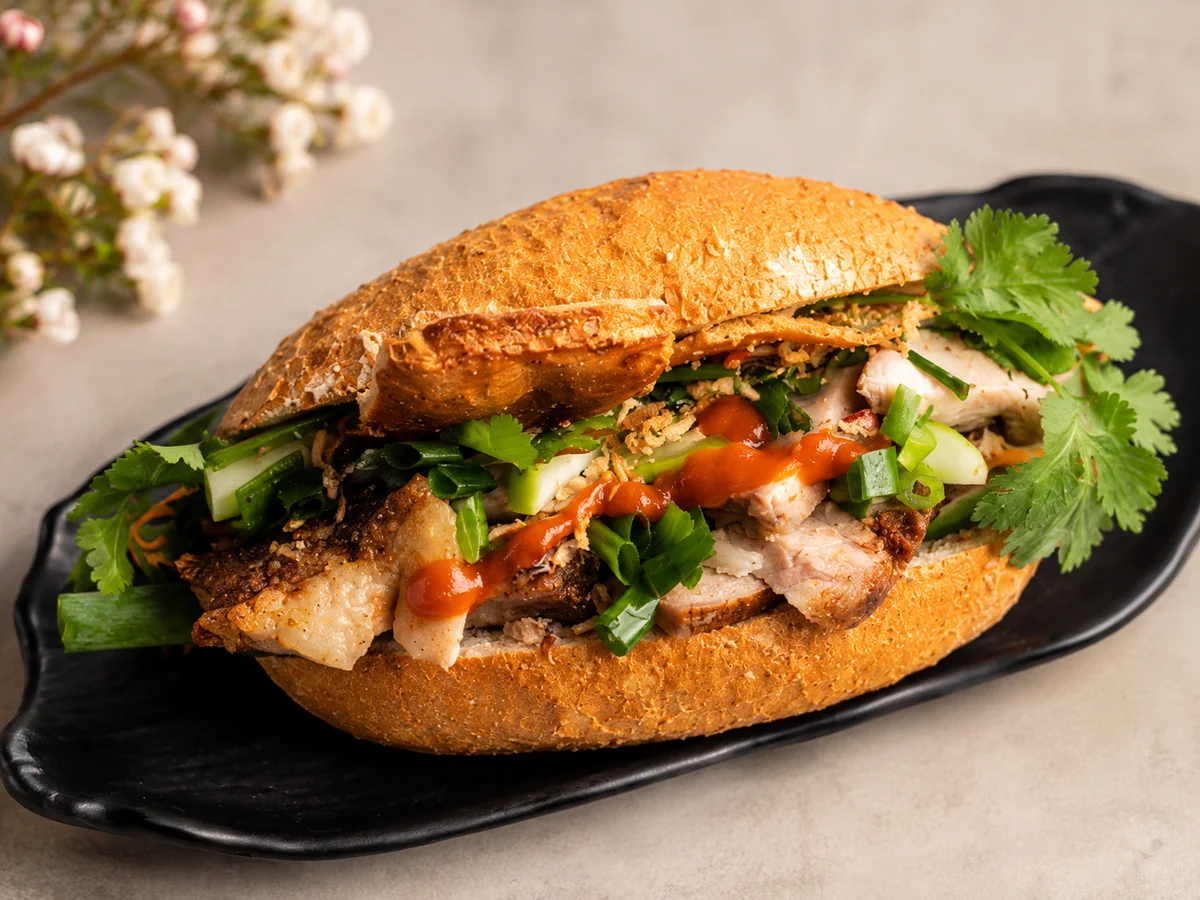
A Great Aunty Three roast pork and crackle banh mi on a Vietnamese baguette with fresh coriander and chilli
Roast pork and crackle banh mi, Pyrmont.
The 1860s

How did a French baguette end up in Vietnam?

The French brought it with them in the 1860s, during their colonial expansion into Vietnam.

For a long time it stayed a French thing. Wheat had to be shipped in, which made bread expensive, which made it food for colonists and the wealthy rather than for everyone else.

So for the first fifty years or so, bread in Vietnam was not really Vietnamese. It was imported, in every sense.

What changed it was not politics. It was a shortage.

The First World War

Why is Vietnamese bread lighter than a French baguette?

Because bakers ran out of wheat and started mixing in rice flour, and the bread came out better.

During the First World War, wheat imports were disrupted. Bakers in Vietnam stretched what they had with cheap local rice flour. Two things happened at once. Bread got a lot cheaper, so ordinary Vietnamese people could finally afford it. And the loaf got fluffier.

That fluffiness is the entire reason banh mi works. A Vietnamese roll has a thin crust that shatters when you bite it and an inside that is airy, almost hollow. Which means you can pack it full without ending up with a jaw workout.

A proper French baguette fights back when you bite it. Great bread, wrong job.

1954 and 1958

When did banh mi become the sandwich we know?

In Saigon, in the 1950s.

Vietnam was partitioned in 1954. More than a million people moved from the north to the south, and they took their cooking with them. Saigon's food changed fast.

In 1958 a shop called Hoa Ma, opened by northern migrants, became one of the first places selling banh mi thit, the version filled with meat. Instead of serving bread and cold cuts on a plate the French way, they put everything inside the roll so people could eat it walking.

That is the moment. Not the arrival of the baguette in the 1860s, and not the rice flour in the 1910s. The moment somebody decided the whole thing should be portable.

Which is where it stayed for about twenty years, until 1975 changed everything. More on that below.

The Build

What goes in a proper banh mi?

Layers, in order, each one doing a job.

  1. The roll. Light, thin crust, airy inside. Everything else fails without this.
  2. Something rich. Pate, mayonnaise or both. This is the base note.
  3. The protein. Roast pork, grilled chicken, cold cuts, tofu. Your pick.
  4. Pickled carrot and daikon. The most important thing in the sandwich.
  5. Cucumber, coriander and chilli. Cold, fresh and sharp against the warm filling.

People skip the pickle because it looks like decoration. It is not. Rich fat with nothing cutting through it flattens out fast. The pickle is sharp and sweet and it resets your mouth every time. Take it out and you are just eating pork in bread.

Our roast pork and crackle banh mi is caramelised pork belly and crackling with green apple, cucumber, carrot and daikon. The green apple is our own thing. It does the same job as the pickle and adds a bit of snap.

Number One in the World

Is banh mi really the best sandwich in the world?

By one of the biggest food rankings there is, yes. With one caveat.

In 2024 the food site TasteAtlas ranked banh mi first out of the top 100 sandwiches in the world. Not first in Asia. First. The filled meat version, banh mi thit, took ninth place on the same list, so Vietnam had two of the top ten. The year before, TasteAtlas had already put banh mi seventh in its top 50 street foods worldwide.

Italy has been making sandwiches for a very long time. So has France, which is where the bread came from in the first place. A roll that exists because bakers ran short of wheat came out above both.

The caveat: TasteAtlas rankings come from user ratings, not a panel of judges. So it is a measure of how much people love it, not proof that it is objectively the best. That is still worth something. Millions of people voted for a Vietnamese bread roll.

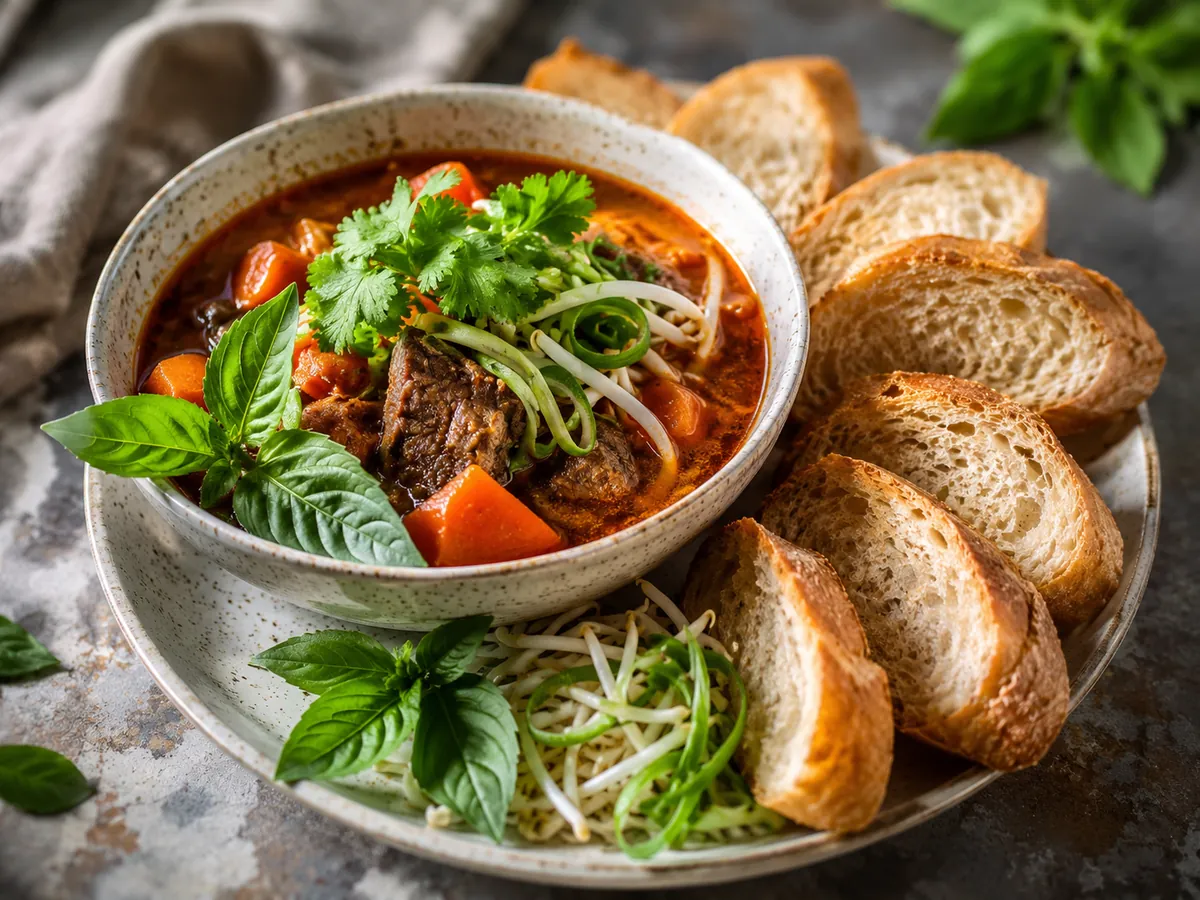
Great Aunty Three beef stew served with a banh mi roll for dipping, a Vietnamese bo kho
Bo kho, beef stew with banh mi for dipping. Same roll, completely different job.
Why It Travelled

Why did banh mi take over the world when other sandwiches did not?

Because it solves a problem every other sandwich has.

Here is our theory. A lot of sandwiches lose you halfway through. Bread, fat, meat, more bread. Your mouth stops noticing.

Banh mi does not let that happen. The pickled carrot and daikon are sharp and sweet, and they reset your mouth every single time. Add cold cucumber and fresh coriander against warm meat, and a crust that actually shatters, and you have four different things happening at once.

Then there is the price. Banh mi was built to be cheap. It was food for workers, made from what a baker could afford. That has largely stuck, which is part of why it spread the way it did.

And it moves well. It is bread. It survives a bike, a train and a lunch break with one hand on it.

How It Spread

How did banh mi get from Saigon to the rest of the world?

People carried it. There was no marketing campaign and no franchise.

After the fall of Saigon in 1975, Vietnamese refugees resettled across Australia, the United States, France and Canada. They opened bakeries because baking was something you could start with very little, and because it was the food they knew.

By 2011 the word had made it into the Oxford English Dictionary. By 2024 it was topping global sandwich rankings. Fifty years, from refugee food to number one.

Sydney got it early and got it properly, because the families who brought it stayed in it. That is the difference between a city that has banh mi and a city that has a banh mi trend.

Our Part of It

How did our banh mi end up on Enmore Road?

Same way. Someone got on a boat.

A mother carried her baby son from Vietnam to Australia. He grew up here in a house where the family recipes mattered and everybody ate together. Years later he went back to Can Tho, where his grandmother had run her own restaurant and was the cook everyone in the family measured themselves against. He found street food being sold out of crates and trolleys with the nightlife going on around it.

He came home and could not let it go. In 2008 he told his family he was quitting a stable office job to sell Vietnamese street food. They asked why he would give up a good job to work himself into the ground for peanuts. Fair question.

His mum was the only one who said yes. He sold the first property she had helped him buy to pay for the shop. She died before it opened.

Great Aunty Three opened anyway, in 2011, on a quiet corner of Enmore Road before Enmore Road got busy. The Inner West lined up for banh mi on their lunch breaks for fifteen years. Tiffany and her team run the kitchen now, in Pyrmont, using the same recipes.

That is the whole reason we take a bread roll seriously. The full story is on our about page.

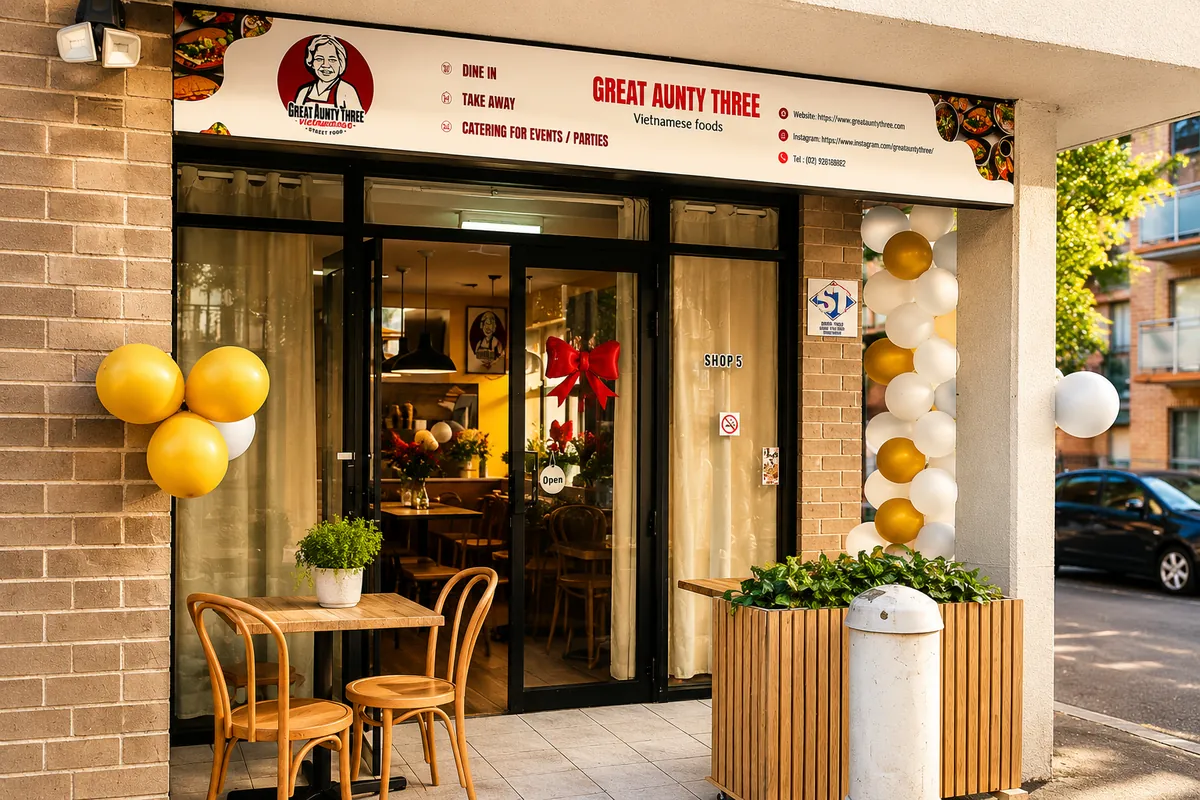
The Great Aunty Three shopfront in Pyrmont with cream signage and red lettering above the entrance
The Pyrmont shop. Fifteen years on Enmore Road came first.
Quick Answers

Common questions about banh mi

Is banh mi the best sandwich in the world?

In 2024 the food site TasteAtlas ranked banh mi first out of the top 100 sandwiches in the world, with the filled meat version banh mi thit taking ninth place on the same list. The year before, TasteAtlas ranked banh mi seventh in its top 50 street foods worldwide. Rankings like these are based on user ratings rather than a scientific test, so treat them as a strong signal of popularity rather than a scientific fact.

What does banh mi actually mean?

In Vietnamese, banh mi just means bread. It is the name of the bread roll itself, not the filling. In English the phrase has come to mean the whole filled sandwich. If you order banh mi in Vietnam without saying what you want in it, you may simply get bread.

How did a French baguette end up in Vietnam?

The French introduced the baguette to Vietnam in the 1860s during their colonial expansion. For decades it stayed an expensive, mostly French thing. What changed it was cost and adaptation, not conquest.

Why is Vietnamese bread lighter than a French baguette?

During the First World War, wheat imports were disrupted, so Vietnamese bakers began mixing in cheaper rice flour. That also made the bread fluffier, and it made bread affordable for ordinary Vietnamese people for the first time. The result is a roll with a thin crackly crust and an airy, almost hollow inside, which is exactly what you want when you are packing it with filling.

When did banh mi become a sandwich?

The filled sandwich as we know it is a Saigon invention of the 1950s. Vietnam was partitioned in 1954 and over a million people moved from north to south, which reshaped Saigon's food. In 1958 the Hoa Ma shop, opened by northern migrants, became one of the first places selling banh mi thit, the filled meat version.

What goes in a proper banh mi?

A classic banh mi is built in layers: the roll, something rich like pate or mayonnaise, a protein, then pickled carrot and daikon, cucumber, coriander and chilli. The pickle is not a garnish. It is the thing that cuts the fat and makes the whole sandwich work.

Where can I get a good banh mi in Pyrmont or Sydney?

Great Aunty Three makes roast pork and crackle banh mi, lemongrass chicken banh mi, a fully vegetarian banh mi and beef stew with banh mi at 5/16-30 Bunn St, Pyrmont NSW 2009. The Urban List described ours as one of Sydney's best banh mi. We have been cooking Vietnamese street food in Sydney since 2011, including fifteen years on Enmore Road.
Since 2011

Where can you get a good banh mi in Pyrmont and Sydney?

Great Aunty Three is at 5/16-30 Bunn St, Pyrmont NSW 2009. We have been making Vietnamese street food in Sydney since 2011, including fifteen years on Enmore Road before we moved.

The Urban List called ours “one of Sydney’s best banh mi”. Time Out put it more bluntly: “the banh mi are the winning ticket here.”

What should I read next?

Sources

Where do these facts come from?

Every date in this article was checked before publishing. Here is where each one comes from.

Where sources disagree we have said so in the text rather than picking the tidier version. Street food is rarely written down while it is happening, which is why some dates are approximate. TasteAtlas rankings are based on user ratings, not a laboratory, so we have described them as a ranking rather than a fact about taste.

Page last updated 13 August 2026.